Services
About Our Village
Information about our village
The Origins of Barkston Ash
The earliest references to Barkston were in 1030 when the spelling was Barcestune which reflected Barkston’s early founders who are likely to have been Scandinavian in origin.
Through Norman appropriations in the 13th century when the de Barkeston family featured frequently in records, and in the Danelaw period of our history, the area prospered. The Barkston Wapentake was huge. It stretched from the river Ouse in the east to the lower reaches of the rivers Aire and Wharfe and then to the boundary of the Roman road, running from Castleford to Wetherby, in the west.
Barkston, therefore, is a village with a history that spans more than one millennium. It lived through both the Wars of the Roses, featuring the Battle of Towton, fought on 29th March 1461, and the English Civil War in the 1640s. The village seems to have escaped without too much change as it moved into the 19th and 20th centuries and developed a solid basis for weathering the upcoming social and economic changes of the First and Second World Wars.
The village was called Barkston and signs in nearby Saxton still refer to the village as Barkston and even today the OS maps make a distinction between Barkston and Barkston Ash.
In the 1950s, Barkston was a working village with nine farms in total. The population of the parish of Barkston was 234 with an area of 1168 acres. Several of those farms are still active today. In the 2021 census the population of Barkston Ash had risen to 360.
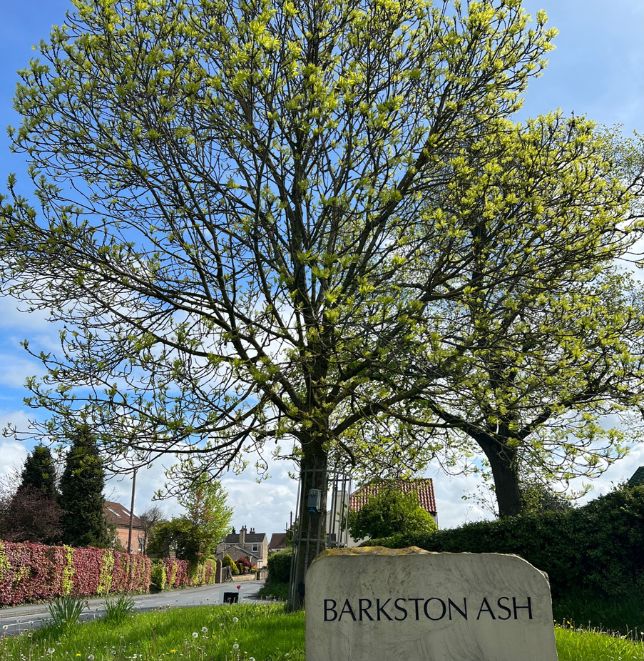
The ash tree that stands on the triangle where the Main Street meets London Road was claimed to mark the centre of Yorkshire. Sadly, the tree had to be replaced in the late 1990s because of age and disease and a new tree was planted in its place.
Village Life
- The village boasts a small Catholic primary school and two pre-schools.
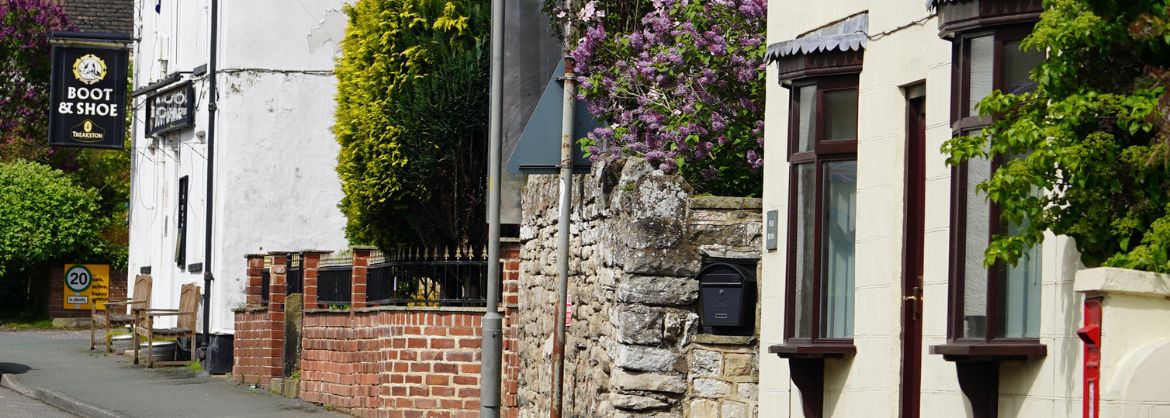
- There are two public houses, the Boot and Shoe on Main Street, and the Ash Tree Inn on London Road.
- There is an active Parish Council.
- There is a village hall run by a committee who are responsible for the hall’s upkeep and renovation.
- The Barkston in Bloom team coordinate the planting and maintenance of flowers beds around the village.
- There is an active, Anglican church which hosts a range of religious and secular activities.
Orientation
The A162 London Road runs from Sherburn In Elmet in the south past the Ash Tree Inn on the left into Barkston Ash village and on past the school on the right to Towton and Tadcaster in the north. Headwell Lane joins Barkston Ash with Saxton in the West, turn right at the junction with London Road to reach the village.
Some properties to the south of Saxton on Cold Hill Lane are also within the Barkston Ash Parish Boundary. Entry from the east is by Common Road from Church Fenton. There are two 90-degree bends in the centre of the village on Church Street and Main Street.
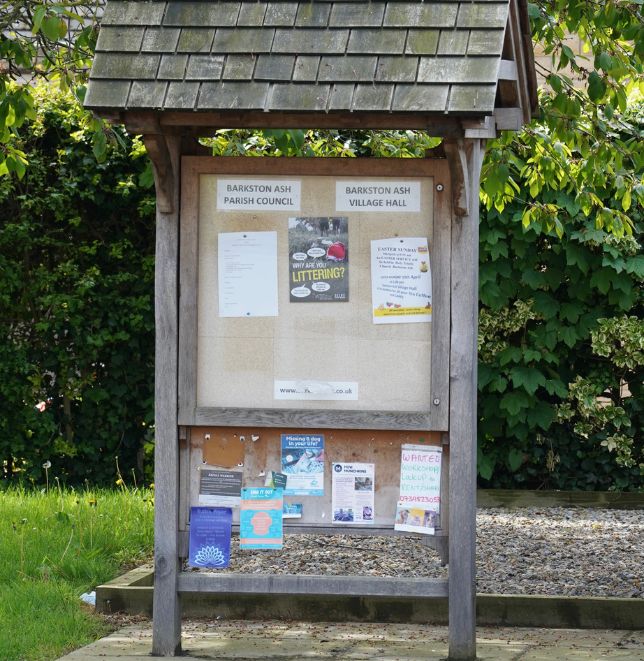
The village notice board is located at the junction of Main Street, Church Street and Back Lane.
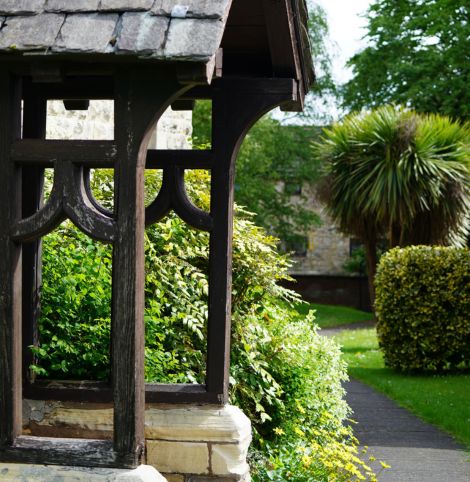
The village hall is through a small gate off Church Street, between the noticeboard and church.
The defibrillator is located on the external wall of the village hall, ring 999 and quote NCPAD613 to receive the unlock code.
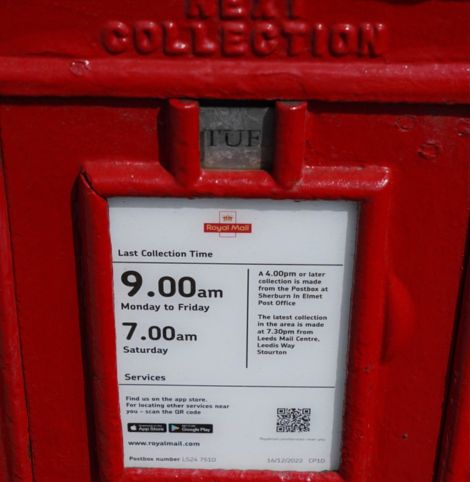
The Royal Mail post-box is in the wall of the property on the corner of Main Street and Church Street opposite the notice board. There is one collection at 9am Monday to Friday and 7am on a Saturday.
The nearest Post Office is in Sherburn in Elmet. The postal delivery depot for Barkston Ash is in Tadcaster.
Services such as planning consent, highways, waste collection are all provided by North Yorkshire Council.